Mark Darcy's death in Darfur
Bridget Jones: Mad About the BoyMark Darcy’s death in Darfur turns a distant conflict into the private catastrophe that shapes Bridget Jones’s life as a widow and single mother. Killed by a landmine while travelling in an armoured vehicle, he leaves behind Bridget and their two very young children. The novel revisits the event not as a single, settled account but through the shock of its first announcement, an old news clipping and memories that continue to interrupt ordinary life five years later.
Circumstances and Public Record
Mark was killed in the Darfur region of Sudan when the armoured vehicle in which he was travelling struck a landmine. The same incident killed Anton Daviniere, a Swiss representative of the UN Human Rights Council. An obituary clipping preserved by Bridget identifies Mark as a British human-rights lawyer, an internationally recognized authority on cross-border litigation and conflict resolution, and a prominent figure in victim representation, international crisis resolution and transitional justice. It records the public stature of a man whose absence, for his family, would be felt through the smallest daily routines.
The clipping also reports a particular achievement shortly before his death: Mark had helped secure the release of British aid workers Ian Thompson and Steven Young, who had been held hostage by a rebel regime for seven months and were believed to face imminent execution. It says that he advised international bodies, governments, opposition groups and public figures, and was a leading supporter of Amnesty International. The article’s formal language presents a career of public service and international consequence; its closing lines narrow abruptly to the family he leaves behind, naming Bridget, their two-year-old son and their three-month-old daughter. A separate on-screen caption gives the dates of his life as 1956–2008.
The Announcement and Immediate Shock
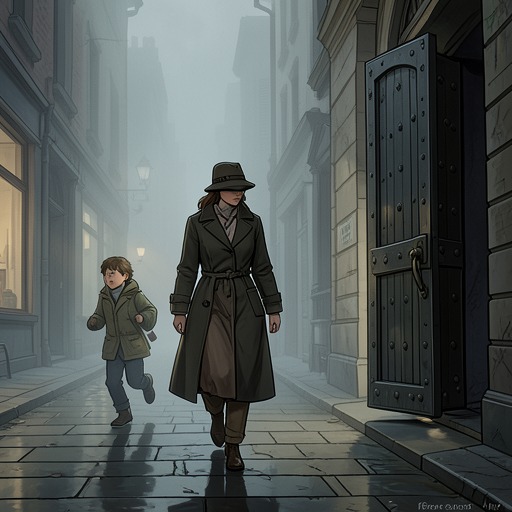
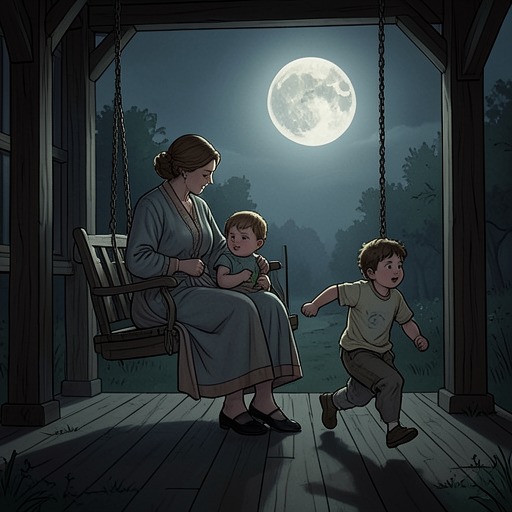
Bridget’s later recollection of the first news is fragmentary. She remembers Billy Darcy running through the house crying that he had lost his father, then Jeremy and Magda at the door with a policeman behind them. She instinctively ran to the children and held them both as they asked what was wrong. Government representatives were in the living room; someone accidentally turned on the news, and Mark’s face appeared beneath the caption confirming his death. The sequence moves between a public announcement and a child’s bewilderment, with no distance in which the family can absorb one before the next demands attention.
The children’s ages sharpen the circumstances of the loss. Mabel Darcy was so little that she could not understand what had happened; Billy was old enough to speak of his father and to become part of Bridget’s most painful recollections. In the immediate aftermath, friends and family surrounded Bridget, while Mark’s lawyer friends handled the will and death duties. The practical arrangements he had made—including financial details and insurance—meant that she did not need to work and could concentrate on the children. The family left their large house in Holland Park, full of memories, and moved to a smaller home in Chalk Farm. Material provision eased some pressures, but it could not restore the husband and father those arrangements were meant to protect.
Grief Against the Work of Living
Bridget remembers waking at five in the morning with a brief, sleep-cleared belief that everything was as before, only to be struck again by the knowledge of Mark’s death. The pain is described as physically immobilizing; then the children would wake, bringing nappies, bottles and the need to keep the household going until help arrived. She might retreat to the bathroom to howl, put on mascara and brace herself to continue. Bereavement counselling offered the children honesty, conversation and a secure base, but Bridget found survival less abstract: it meant changing a nappy while microwaving a fish finger. Her refrain of keeping on going grew out of this collision between loss and care, not from any completed recovery.
Years later, the memories still return in sensory and domestic fragments: Mark’s arm across her shoulder, the feel of his suit, the look in his eyes, and his long puzzle sessions with Billy. Christmas gifts from the children, including the Nespresso machine they had arranged with Chloe’s help, become occasions that also recall the father who cannot share them. Bridget fears that every sweet moment in the children’s lives will be tinged with sadness, and that she cannot endure another Christmas or another year in the same way. On the night she opens the clipping box, the news report’s impersonal account gives way to a letter in which she tells Mark how lonely she is, asks for the comfort and counsel they had promised each other, and mourns that he cannot watch the children grow up.
Recurrence and Narrative Significance
The death is recalled on the eve of the fifth anniversary, but the diary’s counts make clear that grief has not become a closed chapter. On 20 April 2013, Bridget records no sleep and 395 minutes spent thinking about Mark, loss, sadness, death, life without him, dating and the previous year; her thoughts for a screenplay meeting with Greenlight Productions register at zero. She is also in a new relationship with Roxster, yet the diary places the present romance beside the persistent mental return to Mark rather than presenting one as a replacement for the other. The numerical tally makes the competing claims on her attention visible: bereavement, parenting, work and the attempt to become a woman again occupy the same crowded day.
The event’s narrative force lies partly in the contrast between the clipped public record and the unfinished private aftermath. The obituary can state where Mark died, what he accomplished and whom he left behind; Bridget’s memories return instead through a child’s cry, a doorbell, a television caption, early-morning shock and the work of getting through the next task. The death remains a fact of 2008, but in the diary it recurs as an experience with consequences still being lived in 2013.